
301 vs 304 Stainless Steel
If you are comparing 301 stainless steel and 304 stainless steel, you are looking at two of the most popular austenitic stainless steels. Although they have similar compositions, they are designed for different priorities.
- 301 emphasizes strength and work hardening.
- 304 emphasizes corrosion resistance and versatility.
Understanding these differences will help you avoid overpaying for unnecessary performance or choosing a material that cannot meet your requirements.

Quick Answer: 301 vs 304 Stainless Steel
| Feature | 301 Stainless Steel | 304 Stainless Steel |
|---|---|---|
| Stainless Family | Austenitic | Austenitic |
| Corrosion Resistance | Very Good | Excellent |
| Cold Work Hardening | Very High | Moderate |
| Strength After Forming | Higher | Lower |
| Spring Performance | Excellent | Good |
| Formability | Excellent | Excellent |
| Weldability | Good | Excellent |
| Cost | Similar | Similar |
| Common Use | Springs & structural parts | General purpose |
Simple Conclusion
Choose 301 stainless steel if your application requires:
- high strength
- spring properties
- repeated flexing
- lightweight structural components
Choose 304 stainless steel if your application requires:
- corrosion resistance
- food-grade safety
- welding performance
- long-term durability
1. What Is 301 Stainless Steel?
301 stainless steel is an austenitic chromium-nickel stainless steel containing slightly less nickel than 304.
Its biggest advantage is exceptional work hardening.
During:
- rolling
- bending
- stamping
- forming
301 rapidly increases in strength and hardness.
This makes it ideal for products requiring both flexibility and high strength.
Typical Applications of 301 Stainless Steel
- spring wire
- rail vehicle components
- hose clamps
- clips and fasteners
- battery spring contacts
- aircraft structural parts

2. What Is 304 Stainless Steel?
304 is the most widely used stainless steel grade in the world.
It provides an excellent balance of:
- corrosion resistance
- weldability
- formability
- hygiene
- appearance
Because of this, 304 is often called the “general-purpose stainless steel.”
Typical Applications of 304 Stainless Steel
- kitchen equipment
- food processing machinery
- tanks and vessels
- decorative panels
- industrial piping
- architectural products
3. Chemical Composition Comparison
4. Strength Comparison
This is where 301 clearly stands out.
301 Stainless Steel
After cold working, 301 can achieve:
- very high tensile strength
- excellent fatigue resistance
- strong elastic recovery
That’s why 301 is widely used for:
- spring materials
- clips
- high-strength stampings
304 Stainless Steel
304 focuses more on:
- balanced properties
- ease of fabrication
- corrosion resistance
Its strength is lower than hardened 301, but sufficient for most industrial applications.

5. Corrosion Resistance Comparison
Both grades perform very well.
However, 304 has a slight advantage.
301 Corrosion Performance
Suitable for:
- indoor environments
- mild atmospheric exposure
- industrial components
Not ideal for:
- marine environments
- chloride-rich applications
304 Corrosion Performance
304 performs better in:
- humid environments
- food processing
- outdoor applications
- long-term exposure

6. Real-World Application Comparison
| Application | Better Choice |
|---|---|
| Spring wire | 301 |
| Hose clamps | 301 |
| Battery contacts | 301 |
| Kitchen equipment | 304 |
| Water tanks | 304 |
| Decorative panels | 304 |
| Structural clips | 301 |
| Food-grade equipment | 304 |
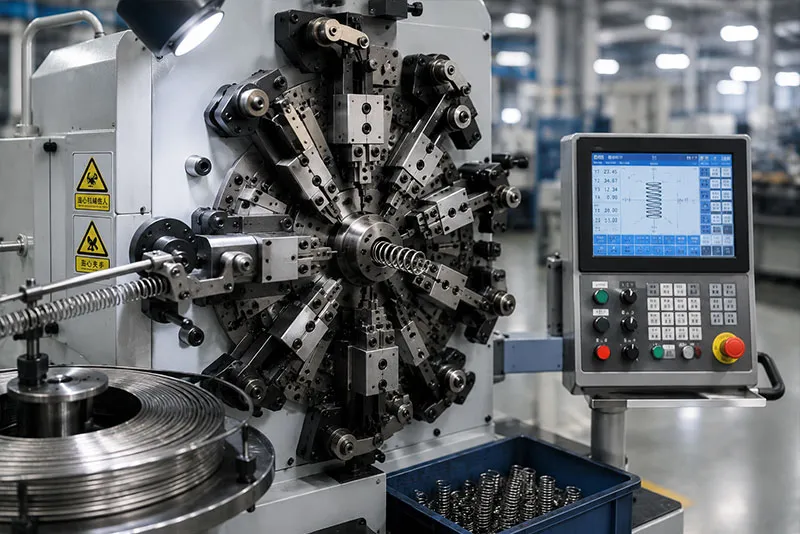
7. Work Hardening Performance
301 is famous for its work-hardening capability.
Why Does This Matter?
After forming, 301 becomes much stronger without heat treatment.
This allows manufacturers to produce:
- thin but strong components
- lightweight structures
- durable springs
Common 301 Tempers
- Annealed
- 1/4 Hard
- 1/2 Hard
- 3/4 Hard
- Full Hard
These conditions are commonly used in spring and stamping industries.
8. Weldability Comparison
| Property | 301 | 304 |
|---|---|---|
| Weldability | Good | Excellent |
| Formability | Excellent | Excellent |
| Deep Drawing | Good | Excellent |
| Work Hardening | Very High | Moderate |
| Spring Recovery | Excellent | Good |
Practical Insight
301 is preferred when:
- strength is important
- thin materials are used
- spring performance matters
304 is preferred when:
- fabrication flexibility matters
- welding is extensive
- corrosion resistance is critical
9. Surface Finish Comparison
301 Stainless Steel
Common finishes:
- 2B
- BA
- hard rolled surface
Typically used in industrial products rather than decorative applications.
304 Stainless Steel
Available in:
- 2B
- BA
- No.4
- Hairline
- Mirror finish
Widely used in decorative and food-grade industries.

10. Magnetism
Both grades are generally non-magnetic in annealed condition.
However, after cold working:
- 301 becomes noticeably magnetic.
- 304 may become slightly magnetic.
This behavior is normal and does not indicate poor quality.
11. Heat Resistance
| Property | 301 | 304 |
|---|---|---|
| Oxidation Resistance | Good | Excellent |
| High Temperature Performance | Good | Excellent |
For continuous high-temperature service, 304 is generally preferred.
12. Cost Comparison
| Material | Relative Cost |
|---|---|
| 301 Stainless Steel | Slightly Lower |
| 304 Stainless Steel | Slightly Higher |
Because 301 contains less nickel, it is often slightly cheaper.
However, actual prices depend on:
- thickness
- temper condition
- processing requirements
13. Which One Should You Choose?
Choose 301 Stainless Steel If:
- high strength is required
- spring properties matter
- weight reduction is important
- components undergo repeated flexing
Choose 304 Stainless Steel If:
- corrosion resistance matters most
- food-grade applications are involved
- welding is extensive
- decorative appearance is important
Final Thoughts
Although 301 and 304 belong to the same stainless steel family, they are optimized for different purposes.
301 focuses on:
- high strength
- work hardening
- spring performance
304 focuses on:
- corrosion resistance
- fabrication
- food-grade applications
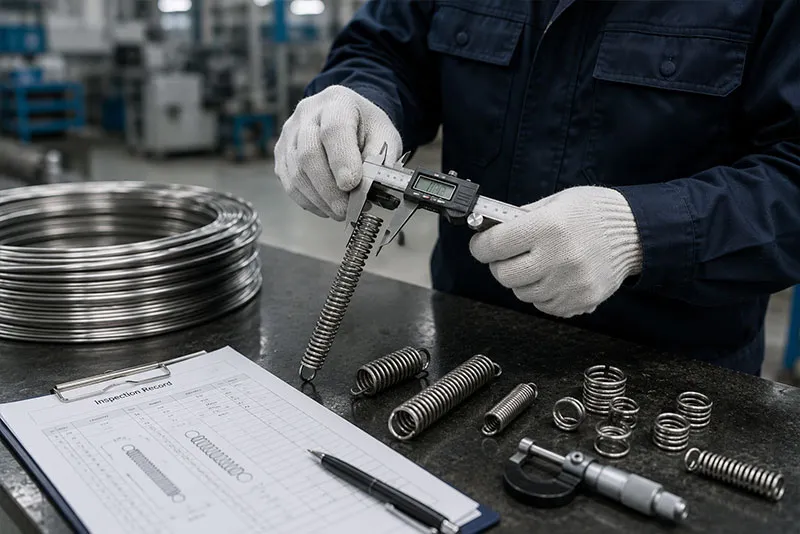
If your application involves springs, clips, battery components, or lightweight structural parts, 301 may provide better performance.
If your project involves tanks, piping, kitchen equipment, or outdoor environments, 304 remains the most versatile and widely accepted solution.
FAQs
Yes.
After cold working, 301 can achieve significantly higher strength than 304.
304 stainless steel.
Its higher nickel content gives it slightly better corrosion resistance.
Yes.
301 is one of the most widely used stainless steels for spring applications.
After cold working, yes.
Annealed 301 is generally non-magnetic.
Sometimes.
If strength is more important than corrosion resistance, 301 may be a better choice.
Continue Exploring Stainless Steel Comparisons
You may also find these guides useful:


 EN
 ES
 RU
 FR
 PT
 DE
 JA
 KO
 ID
 TR
 AR
