
Low Alloy Steel vs Stainless Steel: Strength, Corrosion & Cost Explained
Low alloy steel and stainless steel are often compared in structural and industrial projects. If you focus only on strength or price, you may overlook corrosion risk, maintenance cost, or service life. This guide helps you choose the right material based on real operating conditions.

What’s the Real Difference?
| Aspect | Low Alloy Steel | Stainless Steel |
|---|---|---|
| Alloy Content | Small amounts of Cr, Ni, Mo, Mn | ≥10.5% chromium |
| Primary Advantage | Strength, toughness, cost control | Corrosion resistance, durability |
| Corrosion Resistance | Limited | High |
| Mechanical Strength | High | Medium–high |
| Maintenance | High | Low |
| Typical Service Life | Medium | Long |
In short:
You choose low alloy steel for strength and cost efficiency,
and stainless steel for corrosion resistance and long-term reliability.
What Is Low Alloy Steel?
Low alloy steel is carbon steel enhanced with small amounts of alloying elements, typically below 5% total alloy content.
Common alloying elements include:
Chromium (Cr)
Molybdenum (Mo)
Nickel (Ni)
Manganese (Mn)
Typical examples:
Low alloy steels are designed to improve strength, toughness, or heat resistance, not corrosion resistance.
What Is Stainless Steel?
Stainless steel is a distinct class of alloy steel, defined by its minimum chromium content (≥10.5%), which forms a self-healing passive oxide layer.
As a stainless steel manufacturer highly recognized by long-term international clients, Kongfang Metal commonly supplied stainless steel grades include:
2205 duplex – high strength + corrosion resistance
310S – high-temperature applications
Unlike low alloy steel, corrosion resistance is built into the material itself.
Mechanical Strength & Load Performance
Low Alloy Steel
Higher yield and tensile strength
Excellent load-bearing capability
Suitable for:
Bridges
Pressure vessels
Heavy machinery
Stainless Steel
Moderate to high strength
Duplex grades (2205 / 2507) can match or exceed low alloy steel strength
Better toughness at low temperatures
Key insight:
Low alloy steel wins on strength per cost.
Stainless steel wins on balanced performance.
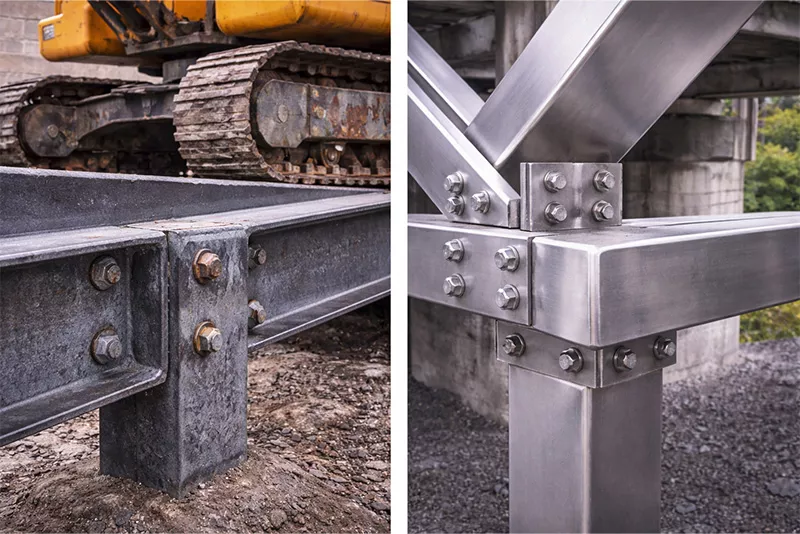
Corrosion Resistance: The Deciding Factor
Low Alloy Steel
Limited corrosion resistance
Requires:
Painting
Galvanizing
Cladding
Corrosion accelerates once coating fails
Stainless Steel
Inherent corrosion resistance
No coating required
Performs well in:
Humidity
Outdoor exposure
Chemical environments
This difference often determines maintenance cost and service life.
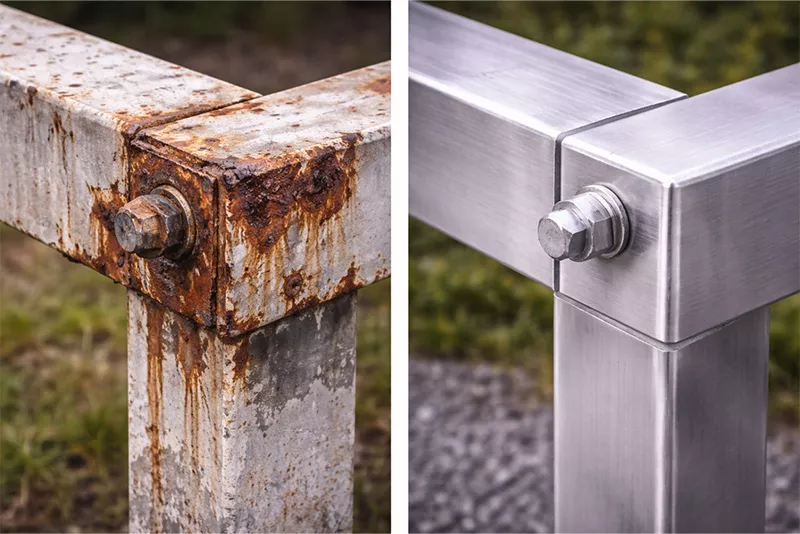
Maintenance & Lifecycle Cost
| Factor | Low Alloy Steel | Stainless Steel |
|---|---|---|
| Initial Cost | Lower | Higher |
| Surface Protection | Required | Not required |
| Maintenance Frequency | High | Low |
| Lifecycle Cost | Medium–high | Low |
Procurement reality:
Low alloy steel reduces upfront cost.
Stainless steel reduces long-term cost.

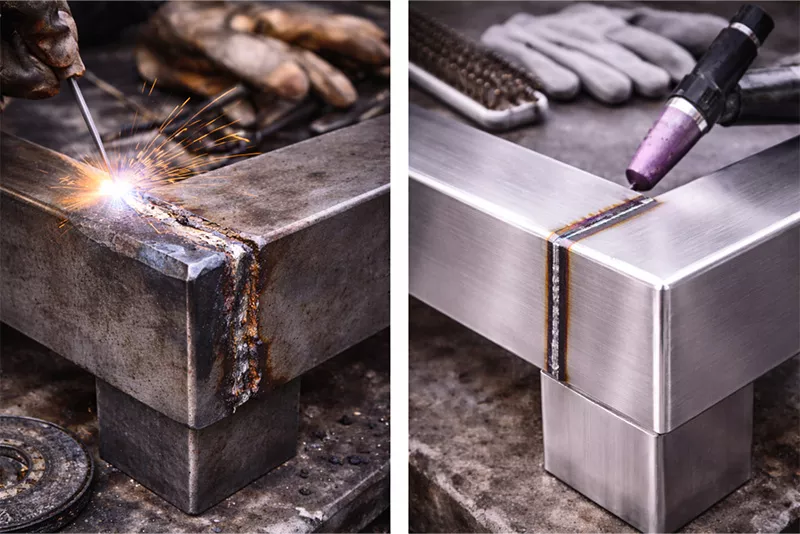
Fabrication & Welding
Low Alloy Steel
Generally easier to machine
Some grades require:
Preheating
Post-weld heat treatment
Coating required after welding
Stainless Steel
Requires proper welding procedures
Clean welds without coating
Better weld zone corrosion resistance
For fabricated structures exposed to weather, stainless steel often outperforms low alloy steel.
Appearance & Surface Stability
Low Alloy Steel
Appearance depends on coating quality
Scratches expose base metal
Visual degradation over time
Stainless Steel
Stable metallic appearance
Can be brushed, polished, or matte
Scratches do not cause rust
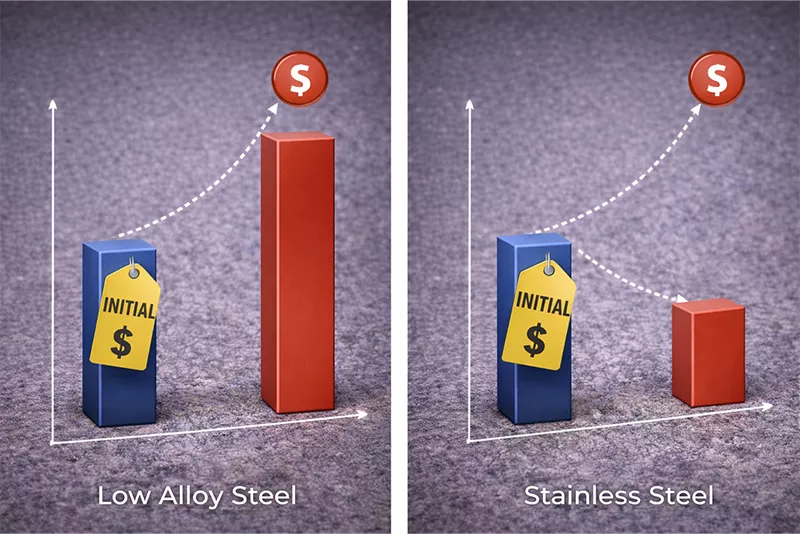
Application-Based Comparison
Structural & Heavy Engineering
Low alloy steel: bridges, frames, pressure vessels
Stainless steel: structures in corrosive environments
Energy & Power
Low alloy steel: boilers, high-pressure systems
Stainless steel: piping, heat exchangers
Outdoor & Public Infrastructure
Low alloy steel: requires heavy protection
Stainless steel: preferred for long-term exposure
Which One Should YOU Choose?
Choose low alloy steel if you need:
High strength
Controlled environment
Lowest initial cost
Choose stainless steel if you need:
Corrosion resistance
Low maintenance
Long service life
For projects with 20–30 years of design life, stainless steel often delivers better total value.
Kongfang Metal supports material selection by matching stainless steel grades to real service conditions.
FAQs
Often yes, but duplex stainless steels can match or exceed its strength.
Yes. Without protection, it corrodes like carbon steel.
Yes, but it is defined specifically by high chromium content and corrosion resistance.
Stainless steel, especially in corrosive or outdoor environments.
Yes, in many applications where corrosion and maintenance are concerns.
Related Material Comparisons
Alloy Steel vs Stainless Steel
Explains strength-driven alloys versus corrosion-resistant steels.
Clarifies why “metal” is a category, not a material.
Compares sacrificial corrosion protection with inherent resistance.
Carbon Steel vs Stainless Steel
Focuses on rust risk, maintenance, and lifecycle cost.
Galvanized Steel vs Stainless Steel
Breaks down coating protection versus material-based protection.


 EN
 ES
 RU
 FR
 PT
 DE
 JA
 KO
 ID
 TR
 AR
