
18/10 vs 18/8 Stainless Steel
What’s the Real Difference in Corrosion Resistance, Quality, and Kitchen Performance?
If you are comparing 18/10 and 18/8 stainless steel, you are probably choosing between two high-quality food-grade materials. The main difference is nickel content, which affects corrosion resistance, appearance, and long-term durability — but not as dramatically as many advertisements claim.

Quick Answer: 18/10 vs 18/8 Stainless Steel
| Feature | 18/10 Stainless Steel | 18/8 Stainless Steel |
|---|---|---|
| Chromium | 18% | 18% |
| Nickel | 10% | 8% |
| Corrosion Resistance | Excellent | Excellent |
| Rust Resistance | Slightly Better | Very Good |
| Appearance | Slightly Brighter | Bright |
| Magnetism | Usually Non-Magnetic | Usually Non-Magnetic |
| Cost | Slightly Higher | Slightly Lower |
| Common Base Grade | 304 family | 304 family |
Simple Conclusion
- Choose 18/10 if you want slightly better corrosion resistance and a more premium finish
- Choose 18/8 if you want nearly the same performance at a lower cost
In most everyday applications, the performance difference is relatively small.
1. What Does 18/10 Stainless Steel Mean?
18/10 stainless steel contains approximately:
It belongs to the austenitic stainless steel family and is usually associated with premium kitchenware and food-grade applications.
Why Is 18/10 Popular?
Because the higher nickel content improves:
- corrosion resistance
- surface brightness
- stain resistance
- long-term appearance retention
Common Applications
- premium cookware
- luxury cutlery
- hotel kitchen equipment
- food preparation systems
2. What Is 18/8 Stainless Steel?
18/8 stainless steel contains approximately:
- 18% chromium
- 8% nickel
It is also generally based on the 304 stainless steel family.
Why Is 18/8 So Widely Used?
Because it provides:
- excellent overall performance
- strong corrosion resistance
- lower cost than 18/10
- excellent food safety
For most kitchens and industrial food applications, 18/8 is already more than sufficient.
3. Chemical Composition Comparison
| Element | 18/10 Stainless Steel | 18/8 Stainless Steel |
|---|---|---|
| Chromium | ~18% | ~18% |
| Nickel | ~10% | ~8% |
| Carbon | Low | Low |
| Structure | Austenitic | Austenitic |
4. Corrosion Resistance (Most Important Difference)
This is the biggest practical difference.
18/10 Stainless Steel
The slightly higher nickel content gives:
- improved corrosion resistance
- better resistance to acidic foods
- improved stain resistance
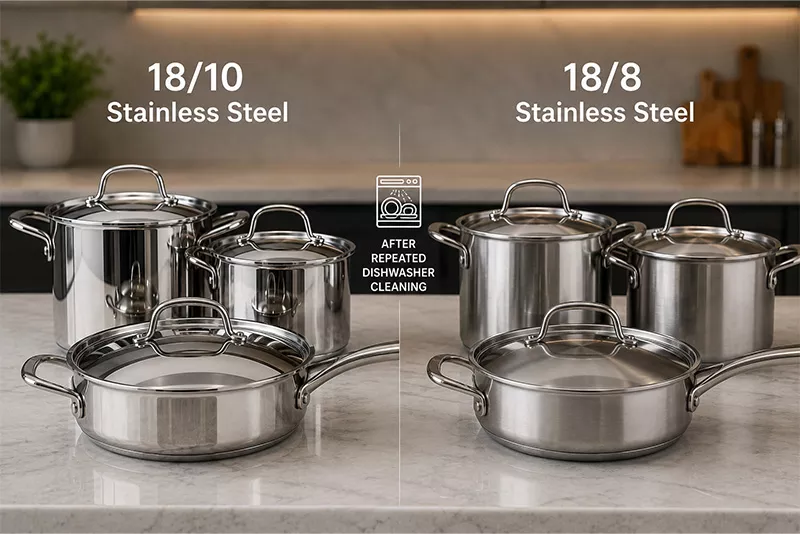
- slightly better dishwasher durability
18/8 Stainless Steel
18/8 still performs extremely well in:
- kitchens
- restaurants
- food processing
- household cookware
In normal use, most users will not notice a major difference.
Real-World Comparison
| Environment | Better Choice |
|---|---|
| Home kitchen | Both |
| Restaurant equipment | Both |
| High humidity | 18/10 |
| Luxury cookware | 18/10 |
| Budget-conscious projects | 18/8 |
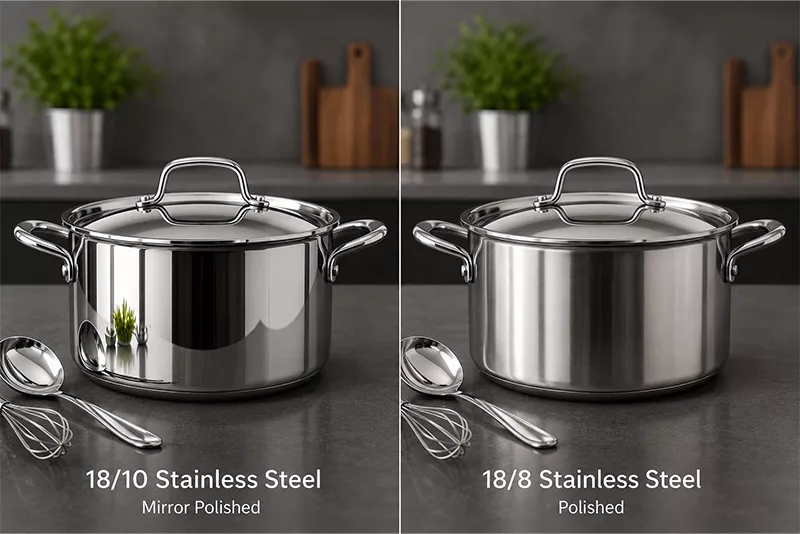
5. Appearance and Surface Finish
18/10
Usually:
- brighter appearance
- deeper reflective finish
- longer-lasting polish
Often marketed as “premium stainless steel.”
18/8
Still offers:
- attractive appearance
- polished surface
- strong durability
The visual difference is usually subtle.
6. Food Safety
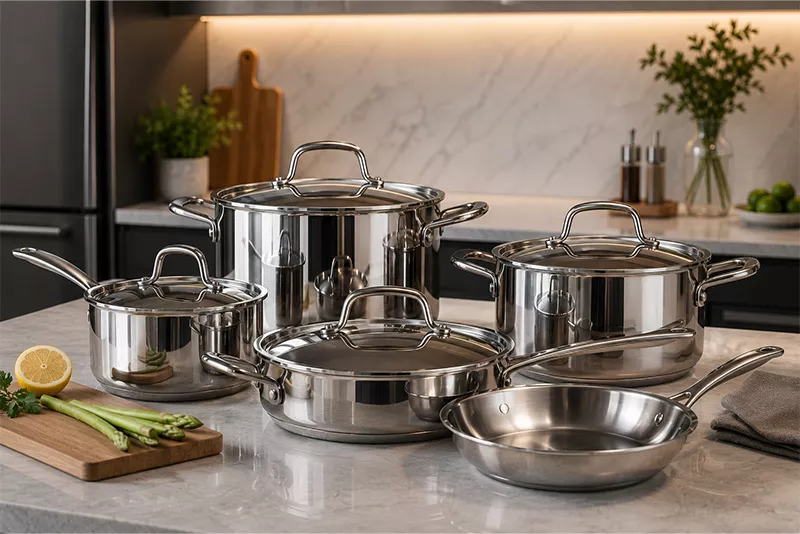
Both 18/10 and 18/8 are considered food-grade stainless steel.
They are widely used in:
- cookware
- kitchen utensils
- food processing equipment
- beverage systems
Which Is Safer?
Both are safe when properly manufactured.
There is no major food safety advantage between them for everyday use.
7. Strength and Durability
| Property | 18/10 | 18/8 |
|---|---|---|
| Toughness | Excellent | Excellent |
| Ductility | Excellent | Excellent |
| Long-Term Appearance | Slightly Better | Very Good |
Practical Insight
Mechanically, the difference is very small.
The main difference is:
- corrosion resistance
- finish quality
- long-term appearance
8. Magnetism
Both are generally:
- non-magnetic
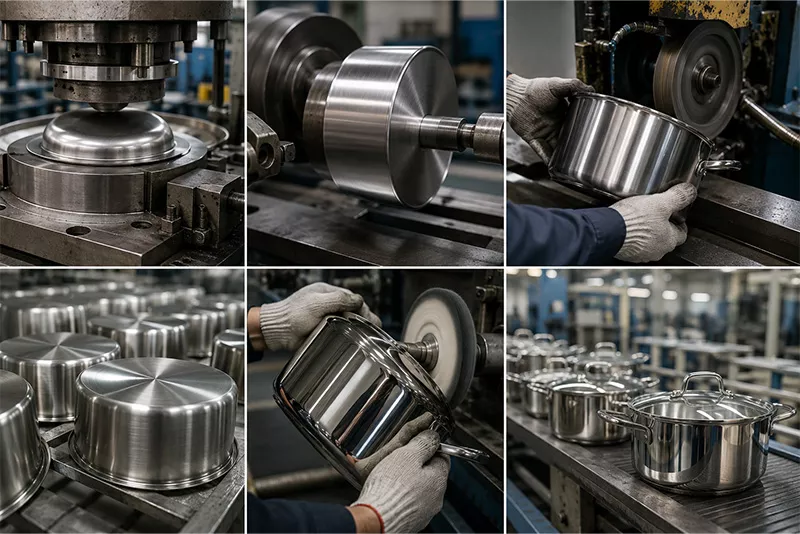
- or only slightly magnetic after forming or cold working
This is normal for austenitic stainless steel.
9. Cost Comparison
| Material | Relative Cost |
|---|---|
| 18/10 Stainless Steel | Slightly Higher |
| 18/8 Stainless Steel | Slightly Lower |
The higher nickel content makes 18/10 more expensive.
Is 18/10 Worth the Extra Cost?
It depends on your priorities.
Choose 18/10 if:
- appearance matters
- luxury positioning matters
- the environment is highly humid
- long-term shine retention is important
Choose 18/8 if:
- you want excellent performance at lower cost
- the application is general kitchenware
- cost-performance ratio matters more
10. Typical Applications
18/10 Stainless Steel Applications
- premium cookware
- luxury flatware
- hotel dining equipment
- high-end kitchen appliances
18/8 Stainless Steel Applications
- commercial kitchen equipment
- cookware
- sinks
- food processing systems
- household utensils
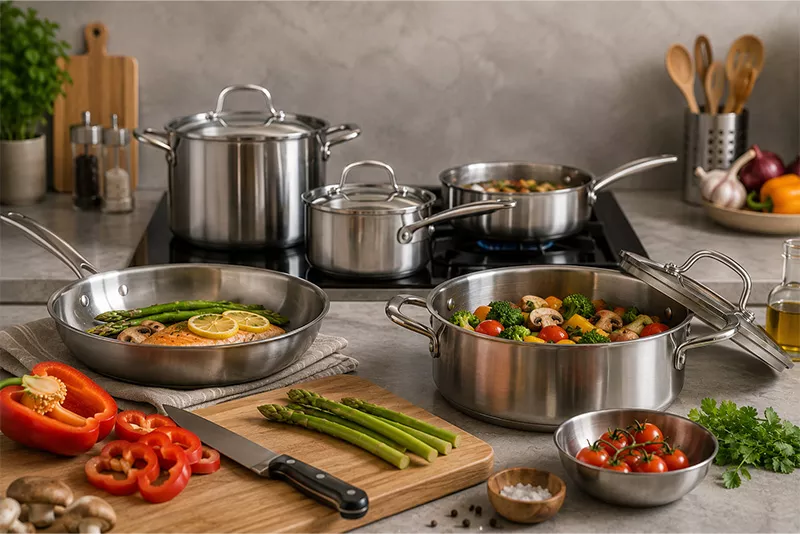
11. 18/10 vs 18/8 vs 304 Stainless Steel
This often confuses buyers.
In reality:
- both 18/10 and 18/8 are usually part of the 304 stainless steel family
The numbers mainly describe:
- chromium content
- nickel content
Important Insight
The performance gap between 18/10 and 18/8 is much smaller than:
Which One Should You Choose?
Choose 18/10 Stainless Steel If:
- you want premium appearance
- corrosion resistance is slightly more important
- your product targets high-end markets
- long-term polish retention matters
Choose 18/8 Stainless Steel If:
- you want excellent value
- the environment is normal kitchen use
- you need food-grade stainless steel at lower cost
- large-volume procurement matters
FAQs
Slightly.
18/10 offers somewhat better corrosion resistance and appearance retention due to higher nickel content.
Usually only slightly.
Most users cannot easily distinguish them in everyday use.
Yes.
18/8 is widely used in food-grade applications worldwide.
Generally yes, especially in humid or acidic environments.
Both are excellent.
18/10 is more premium, while 18/8 offers better cost-performance balance.
Final Thoughts
18/10 and 18/8 stainless steel are both excellent food-grade materials.
The difference is not dramatic, but:
- 18/10 focuses more on premium appearance and slightly improved corrosion resistance
- 18/8 focuses on balancing performance and cost
For most users, 18/8 is already highly reliable.
For luxury kitchenware and premium branding, 18/10 is often preferred.
Continue Exploring Stainless Steel Comparisons
You may also find these stainless steel comparisons useful:
- 18/10 vs 18/0 Stainless Steel
- 18-8 vs 201 Stainless Steel
- 304 vs 316 Stainless Steel
- 430 vs 304 Stainless Steel
These guides help you compare food-grade stainless steels in terms of corrosion resistance, kitchen performance, cost, and long-term durability.


 EN
 ES
 RU
 FR
 PT
 DE
 JA
 KO
 ID
 TR
 AR
